Sydney students visit Pakistan

Back in 2007, when only a handful of people had anything complimentary to say about Pakistan, some intrepid students discover a delightfully different reality

When one of our lecturers from The Department of Linguistics at the University of Sydney asked six students: Emily Hunter, Jane Harvey, Jana Rezková, Sandy Chang, Yuka Funabashi and I if we would be interested in accompanying him to Pakistan to present our various research papers at the 23rd annual Society of Pakistan English Language Teachers (SPELT) conference, we jumped at the opportunity. While most of us were busy preparing our end of semester papers, the excitement was quietly mounting beneath the manic exterior; for I think now, we all sensed that a unique experience was about to happen.

On arrival at Jinnah International on 1 November 2007, we were whisked away by our surrogate family to the comforts of our new surroundings. We barely had time to catch our breath before being initiated into the frenetic Karachi traffic. First port of call was Bahadurabad to get us attired in shalwar kameez: the three-piece outfit consisting of loose-fitting pants, shalwar, a long tunic or kameez, and a long, flowing scarf called a dupatta. Not ever having seen so many bright colours in the one place before, well, let’s say we were spoilt for choice. As well, it turned out to be an exercise in patience on the part of our lecturer in taking six women shopping! Next stop came our introduction to Pakistani cuisine: the roll kebab. And we were hooked. After many squeals emanating from my colleagues on the trip home, due to the likes of traffic they hadn’t ever witnessed before, we finally collapsed into an exhausted heap, only to be awoken at sunrise by the call to prayer and a welcoming “as-salaam walaikum” as we wearily found our way downstairs to breakfast.

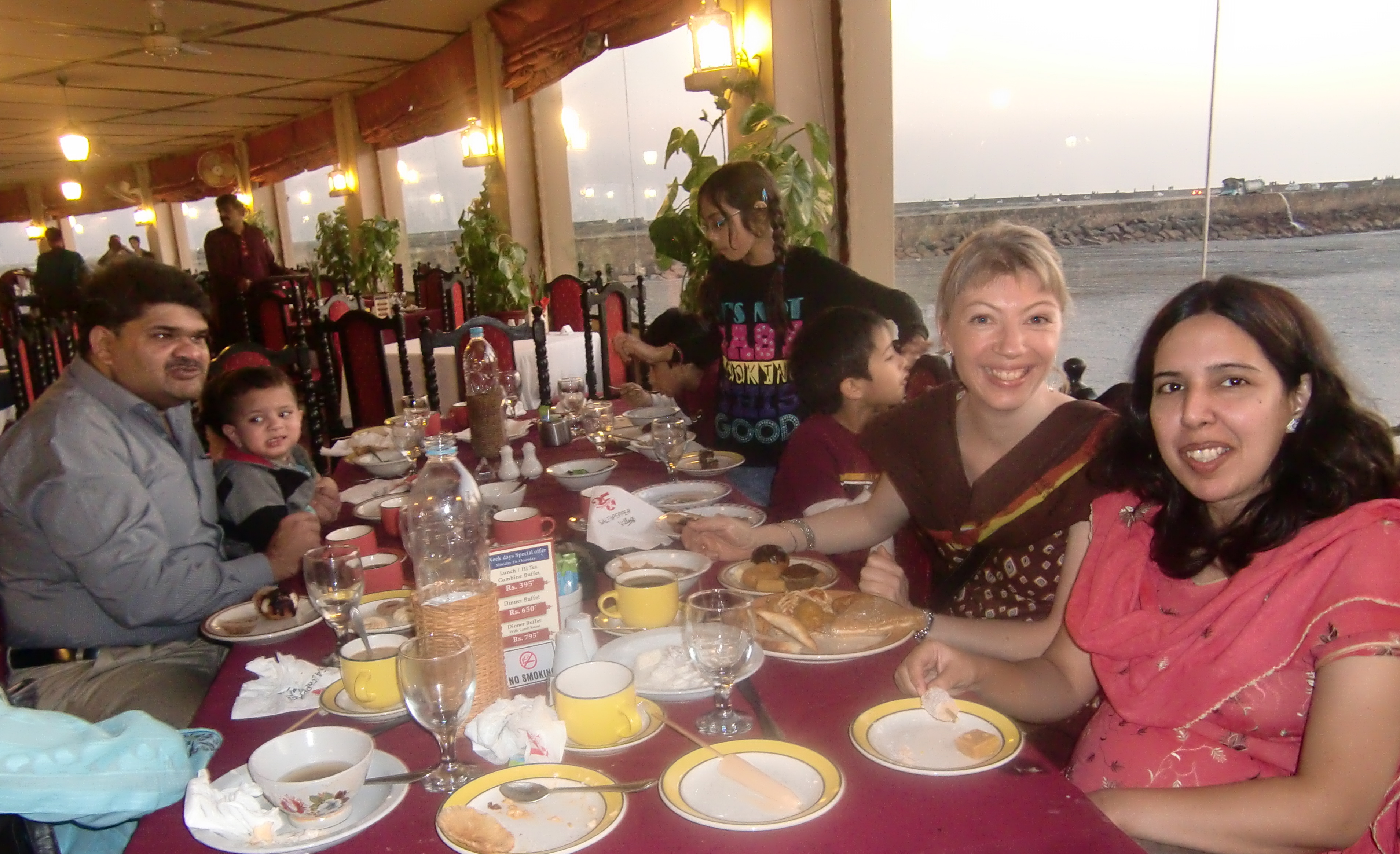
Our days were a mixture of conference commitments, presentations at Karachi and Aga Khan Universities, teamed with site-seeing escapades: camel rides and snake-charming on Clifton Beach while taking in the magnificent sunset; shopping; a visit to Mohatta Palace followed by high tea at The Village, a spot of sheisha at Seaview and more shopping intermingled with numerous visits to the homes of new-found friends. Then there was the very swish soirée hosted by the British Council. Students never had it quite so good! On the final day of the conference when all the formalities were said and done, we managed to escape to the cool of the Prince Theatre to see the acclaimed movie Khuda Kay Liye, In the Name of God, which we all enjoyed immensely for its cultural value.

Along the way, we, the PAC (Pakistan Adventure Club), adopted many names for ourselves: the brood, the kids, the gang, the family; these pseudonyms formed part of the invisible glue binding us together through our new shared experiences.

Since the conference was a moveable feast, the next destination was Abbottabad, which we reached courtesy of PIA through Islamabad. Unfortunately, we didn’t see a lot of Abbottabad itself, but that was counterbalanced by the enthusiastic welcome and generous hospitality offered by our hosts. Leaving Abbottabad, we drove through some magnificent landscape of dramatic gorges and mountains before stopping for lunch in charming Nathia Gali, then onto Murree for more delicious food and naturally more shopping. Since our arrival in Islamabad coincided with Benizir Bhutto’s, as well as the fact that there was a demonstration due to be held the following day, the conference had been cancelled and the city was more or less in lockdown. However, after the security alert had been relaxed, this only gave us the green light for further site-seeing adventures, always accompanied by our generous hosts. We concluded our visit with our presentations at Fatima Jinnah Women’s University in Rawalpindi before departing by bus for Lahore.

Lahore was something else; a city steeped in history. On our ‘must-see’ list was the Wazir Khan Mosque, since it was one of the scenes featured in Khuda Kay Liye; and what visit to Lahore would be complete without looking in on the breathtaking Lahore Fort! Being a Sunday, there was a throng there. We, ourselves, at times became the tourist attraction; the locals just as intrigued by us as we were by them. We befriended Omayr who happened to be staying at the same guest-house as us. Lucky for us he turned out to be a Lahorite and offered to chauffeur us around. Our calendar consisted of dinner at Cooco’s Den and Café, sheisha at Jumping Java, a visit to the magnificent Shalimar Gardens, and our final lunch as ‘a family’ at The Village. Sadly, Jane and Sandy had to depart for the real world. All good things must come to an end. What we had lost though in numbers we made up for in enthusiasm.

Warm faces welcomed us wherever we went and Multan was no exception. After presenting our papers for the final time at Bahauddin Zakariya University, a delicious surprise awaited us; we were transported by car through lush agricultural land to where we took a boat to one of the islands in the middle of River Ravi. What we then feasted our eyes on was nothing short of a scene out of 1001 Arabian Nights. A sumptuous meal had been prepared by the wife of one of our hosts, which we enjoyed in our tent seated on plush carpets. What enhanced our magical experience occurred on our return trip to the mainland. Since the current was strong enough to propel the boat in the desired direction, the engine was switched off, allowing us to drift silently in the hazy darkness. Yet another memorable event was an afternoon shopping expedition stopping off for periodic cups of doodh-patti (milk tea) before our de rigueur foray into the world of bangles – a thrilling event in itself.

What an incredible adventure we had! All in all there were late nights and some very early mornings. Every wink of sleep lost was worth its weight in gold; we wouldn’t have missed any of it for the world; and for the heart-warming welcome we received wherever we went: Shukriya, Pakistan!
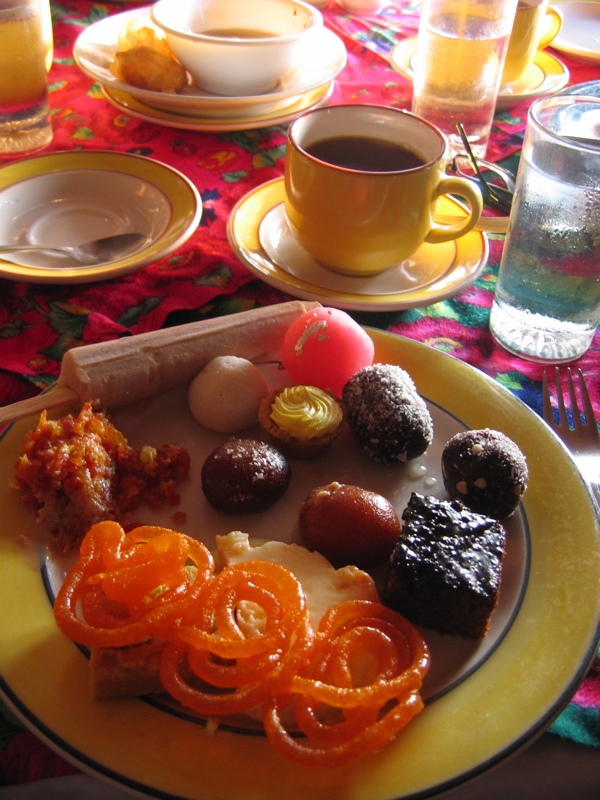
Karachi: high tea
High tea in Karachi with the sweetest of sweets
Karachi University
At Karachi University: making connections
Some of the conference presenters and organisers
Abbottabad
Abbottabad
Lahore: Wazir Khan Mosque
Atmospheric Lahore: at Cooco's Den and Cafe
Atmospheric Lahore: at Cooco’s Den and Cafe
The happy gang explores the Lahore Fort
Multan: 1001 Arabian Nights
Multan: showing off our bangles

Danielle Gehrmann

The above above has some minor modifications. The original article can be found at: http://sadaewatansydney.com//students-pk.htm


Memories I live and breathe – the call to Pakistan

In this article, I take an introspective journey and consider my collective memories of my long-time relationship with Pakistan, and its dynamic contribution to our contemporary world.

Judge a moth by the beauty of its candle.

Shams is invisible because he is inside sight.

He is the intelligent essence

Of what is everywhere at once, seeing.

Rumi

Pakistan tends to be a rather misunderstood corner of our planet, with a plethora of negativity and associated images emanating from international mass media. Undoubtedly, such an overrepresentation has contributed largely to a somewhat distorted image of the country. Through my first-hand experiences, I have subsequently sought to fill this enormous gap, with an aim to provide information and present this oft-maligned place in a more balanced way. Somehow assuming the role of accidental brand ambassador, I have found myself reporting on aspects of the country, which are often overlooked and shielded from the international eye. My writings have ranged from hard political, economic, and diplomatic to the more light-hearted. Yet, my attempts to present a Pakistan beyond the media stereotype have frequently been met with resistance. Further, my visits seem to have placed me in the precarious position of bringing a non-Pakistani voice to the table and consequently attracting criticism for such an ‘idealistic’ stance, as well as several rebukes for even visiting the country in the first place, given “The way they treat their women!” Sometimes, even I find the ignorance astounding: “Is that safe?”; “I thought everyone would be in a burqa!” while I’m left to explain that the dress code for women in Pakistan is largely not as in Iran or Afghanistan. Despite Pakistan being home to two Nobel Peace Prize laureates, including the youngest-ever, Malala Yousafzai, somehow the reality of many Pakistanis as urban, well-educated, ambitious, upwardly mobile, dynamic, and many with a strong entrepreneurial spirit, is getting lost in the fray. 

Frere Hall: Nineteenth Century architecture

No matter the amount of television news reports you see or articles you read, nothing heightens your sensitivity toward a place more than first-hand experience. My well-considered opinion is that Pakistan receives a lot of bad press and, frankly, deserves better.

The journey starts in 2007, when, as a student, I was invited to present a research study at a language-teaching conference, along with five other students from the University of Sydney. Our travels all over the country turned out to be a life-changing experience. My second visit was at the end of 2009, when a friend invited me to join her and her family for the end-of-year holidays. In 2012, a couple of brother-sister friends from Sydney decided to have a double wedding extravaganza in Karachi and it was such an honour to share in their happy occasions. In 2015, one of my best friends married in Karachi; the pre-wedding preparations were certainly fun, yet nerve-raking at the same time. The most recent visit, in 2019, was at the invitation of a friend in Lahore for his wedding celebrations. And the difference between a Punjabi wedding and a Karachi wedding really struck me!

Beyond purely social engagements, I manage to give at least one talk every visit; and in 2019, I spoke to some very engaging high school students in Lahore. I have previously appeared on a talk show for PTV World in Karachi. In Australia, I give occasional talks and enjoy attending functions to further Australia-Pakistan relations. Throughout those five visits, I have developed an affinity for colourful fashion and handicrafts; whether a Sindhi wall hanging with inlaid mirror work given to me by a friend in Karachi; a beautiful woven carpet from Lahore; a hand-made wooden- and silver-framed mirror, plus some leather and cowhide cushions, all take pride of place in my home. For special occasions, I like to wear “Made in Pakistan,” whether a striking shawl or one of my bespoke pieces by a designer friend in Karachi, co-ordinated with bangles and other fun pieces of which I have amassed quite a collection. A handbag by an iconic local leather goods brand has turned into a favourite and nearly always attracts a compliment every time I use it. There’s a little bit of Pakistan fairly close by at any given moment.

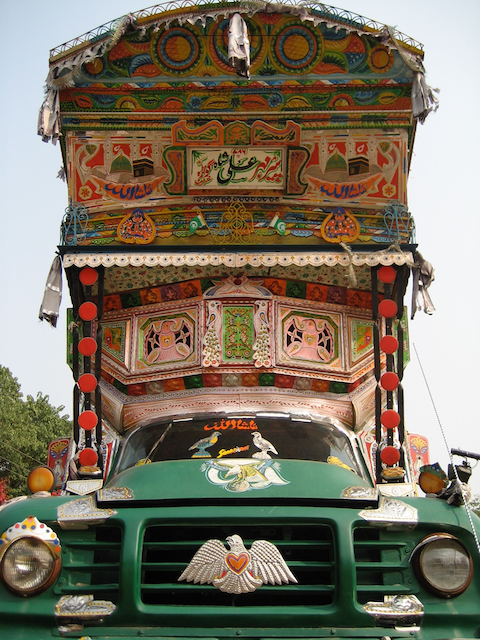
Distinctive Pakistani truck art

As much of the world is emerging from a harrowing couple of years since the start of the COVID19 pandemic, there is renewed excitement in the air. On the whole, Pakistan has fared well in the management of the pandemic, thanks to gold-standard tracing and record keeping developed during the polio vaccination drive. And I’m feeling the pull, back to Pakistan to reunite with friends who have become like family and experience more of the five Fs: friends, family, fun, fashion and food – khana: the most important word in Urdu! Overwhelming generosity and hospitality, historical treasures, archeological sites, the varied perspectives of multicultural Pakistan from the eastern areas of Punjab across to Balochistan towards Iran, each with their own identities uniquely expressed through differing customs, styles of music and varied spices used in their respective cuisines will captivate even the most discerning traveller and mesmerise you like a snake charmer on Clifton Beach, in Karachi. You, too, will submit.

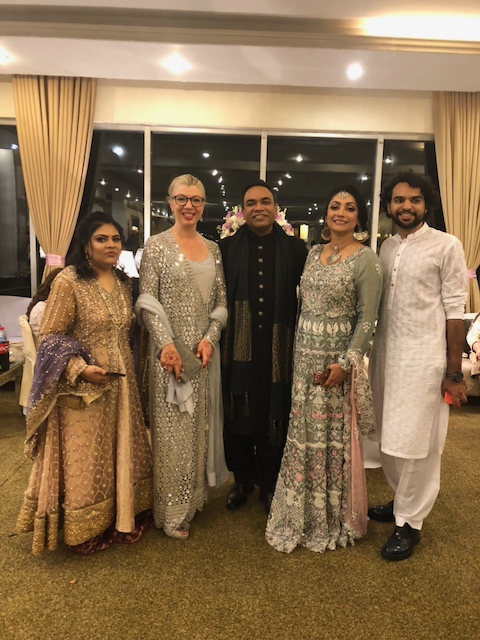
A Punjabi wedding: a once in a lifetime experience – Lahore, Lahore hai!

On my last visit, I vowed to venture up north on my next visit. We had a glimpse of Pakistan’s striking northern beauty when we stopped in delightful Nathia Gali en route from Abbottabad to Islamabad, in 2007, and so the Himalayas are a huge draw card for the next trip. At the top of the list are Chitral, Mingora, Swat, and around Hunza, Skardu, and Gilgit. For geology enthusiasts, Pakistan is home to the second largest salt mine in the world: the Khewra Salt Mine, a prime tourist attraction, located in the province of Punjab. Thanks to policy reforms in recent years, rest assured that this kitchen staple will reach you directly from Pakistan. 

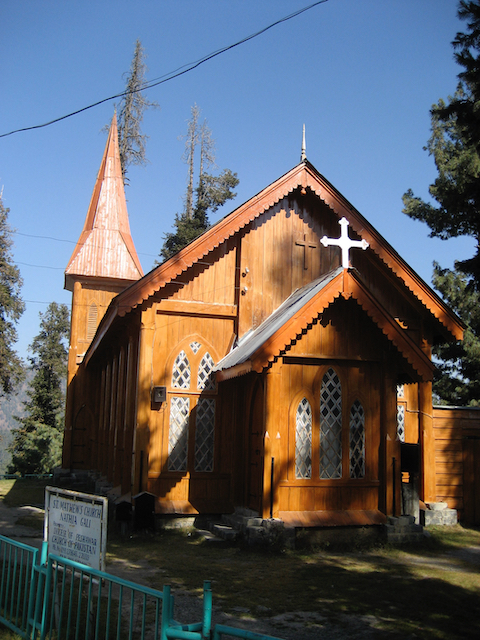
St. Mathew’s Church, Nathia Gali, built 1914

My memories are, indeed, vivid and wonderful, past and present, and fill me with warmth and gratitude for all the amazing friendships and connections forged throughout the years; and every time I return, the memories and friendships just keep getting more wonderful and more amazing. It certainly feels like the time is ripe to relive some old, treasured memories and create some new ones!

Danielle M. Gehrmann

The above version has some minor modifications and hyperlinks, which were missed in the original publication at: https://dnd.com.pk/memories-i-live-and-breathe-the-call-to-pakistan/261245

All photos are from my personal collection.

Acknowledgement: Much appreciation to Brigadier Shoaib bin Akram for his patience, generosity, and assistance in the publication of this article.

A matter of perspective

One journey across Pakistan only leaves a visitor wanting more

Let’s face it. Most of the news that emerges from the global media powerhouses about Pakistan, is of a country more or less emerged in civil unrest and sectarian violence, where bombs explode left, right and centre and where blacklisted organisations try to stake their perceived claim to Pakistan. On the whole, the overall security situation is described as precarious at best.

My story though is not to continue with the daily battering that Pakistan receives, but to reveal the Pakistan of which I have become rather fond.

Cooks, cleaners, drivers, snake charmers, anarchic traffic, hot bazaars, armoured vehicles, personal bodyguards… Life is good in Pakistan. Yet, it is not a place for the faint-hearted; but that is a matter of perspective. I was born and have spent most of my life in Sydney: “Sleepy Sydney”, as a friend’s father affectionately calls it. He is a Pakistani.

I would describe my two visits to Pakistan, in 2007 and 2010, as nothing short of rewarding. In 2007, I attended the Society of Pakistan English Language Teachers Conference with a group from the University of Sydney. Travelling from Karachi to Abbottabad, Murree, Nathiagali, Islamabad, Lahore and Multan before returning to Karachi, we indeed took in some stunning sights between conference commitments.

Pakistan is home to K2, the second highest peak in the world. If you enjoy hiking, trekking and generally communing with nature, Gilgit, Hunza and Skardu in the northern areas of the country might do it for you. The Thar Desert is another formidable area I would like to explore.

The peace and serenity of the Himalayas formed the backdrop for our winding drive from Abbottabad to Islamabad, via charming Nathiagali and the thriving market town of Murree. Historical treasure such as the Lahore Fort stands with pride of place in the Pakistani consciousness and certainly took our breath away. The UNESCO World Heritage-listed Shalamar Gardens, created by the Mughal Emperor Shah Jahan in the 17th century, and the only one remaining of several that were created during his reign, would certainly rival the Tuileries Gardens in Paris in the historical stakes. For a religious flavour, the shrines in Multan were humbling and awe-inspiring at the same time. Our journey up the River Ravi, part of the Indus River system only left us wanting more.

We developed a liking for handicrafts, such as carved wood, woollen carpets and soft furnishings; clothing such as the shalwar kameez and cashmere shawls; accessories such as handbags and bangles and souvenirs from the kitsch to the highly exotic. Given the affordability of merchandise, shopping expeditions started to figure highly on our agenda.

Something you cannot put a figure on was the friendliness and endless hospitality we encountered all over the country. In Islamabad, a family spontaneously opened their home to seven of us when our accommodation fell through at the last minute and conference organisers and hosts saw to our every comfort wherever we went.

In my opinion, Pakistani cuisine rivals some of the top cuisines of the world for its delectable mix of spices, a wide variety of steaming hot roti, meat and vegetarian dishes, and out-of-this-world sweets, catering to every taste bud.

Thanks to Facebook and Twitter, friendships formed on that 2007 trip were rekindled in January this year, when a friend and I, along with her four children, travelled to Karachi together. The main premise was to visit family and friends. A lesson about important bygone epochs came when her father organised a family day trip to Thatta, which is a city known for its shrines of various dynasties that once presided over the landmass that is now Pakistan. This outing also included a visit to the stunning mosque in the centre of town erected by Emperor Shah Jahan in the 15th century.

An abundance of sites across the country should please even the most discerning archaeology or history aficionado. Only a stone’s throw from the capital Islamabad lies Taxila, which was a port of call for Alexander the Great en route to India. In Taxila’s environs, Greek, Buddhist and Hindu ruins are testament to the various cultures and religions to which Pakistan has played host since ancient times. Moenjodaro in Sindh, heart of the Indus River Valley Civilisations, is regarded as one of the most remarkable cities of the ancient world. The Pakistan National Museum in Karachi houses some priceless artefacts of both the ancient and modern worlds; another reminder of a rich history indeed worth preserving.

I consider pre-departure research makes one’s travelling experience all the more rewarding and is simply part of being a responsible traveller. An open mind is another essential element and Pakistan will reward your effort. Avoiding demonstrations, clutching your bag a bit more tightly in busy areas and surveying a street before you walk down it are all standard precautionary measures to take anywhere in the world. Moving about in a large cosmopolitan metropolis such as Karachi, and travelling around Pakistan, I do not recall ever having felt unsafe or in a threatening environment. On the contrary, since Pakistanis don’t often encounter foreign travellers, they are genuinely thrilled and honoured that you have chosen to visit their country.

Speaking from experience, family, friends and food are three elements at the heart of Pakistani culture. If you travel here for the first time, I guarantee that your efforts will be rewarded, for you too will be struck by its charm and embraced as part of the Pakistani family by the time you leave.

The version above has some minor modifications. The original article can be found at: 

http://jang.com.pk/thenews/jun2010-weekly/nos-13-06-2010/foo.htm#2

Holiday snapshots from Pakistan

A report on my second trip to Pakistan at the beginning of 2010. On our return, my travelling companion and friend, Huma Ahmar, and I had a lot of fun and laughs writing this:

“Breathe and smile!” This philosophy stood us in good stead during our recent trip to Karachi, as some considered us rather brave travelling with four young children (ages 11-4)! We met up in Hong Kong and travelled to Karachi on Pakistan International Airlines. This was Danielle’s second trip to Pakistan (she wrote about her previous trip for Sada-e-Watan in 2008: “Sydney University students in Pakistan,” http://www.sadaewatansydney.com/students-pk.htm).

Exhausted after the long night flight and transit through Islamabad, we ambled out onto the sun-drenched forecourt of Jinnah International, where we were warmly greeted by Huma’s family. There was an instant sense of familiarity as we were swept up in the chaotic Karachi traffic. We had arrived.

On the second day, we ventured out for a spot of afternoon shopping in Bahadurabad with Bhabi, sister-in-law in Urdu. How fashions can change in two years! Yet, the new styles started to grow on us by the end of the afternoon and we did indulge in some new pieces.

Some exciting events figured in our packed schedule. Three birthdays punctuated our time in Karachi and we managed to stretch them out pretty well too! There was a family dinner at Largess and an afternoon tea, lunches at Lasania and Arizona Grill in Zamzama and cakes galore, of course! Plans were in full swing for a reunion with Huma’s English Department pals from her student days at Karachi University and about 13 of us made it to Roasters in Zamzama. The lively atmosphere grew as everyone was taking a trip down memory lane while having a chuckle about the good ol’ KU days. Usually, when you’re the outsider at these types of gatherings, the stories and jokes tend to be a bit lost on you; but we all had a memorable evening filled with fun and laughter.

An inspiring occasion held at the Arts Council was an evening dedicated to the Student Movement of the 1950s. We were kindly invited by Zakia Sarwar, whose late husband was one of its leaders. The theme of the evening was “Looking back to look forward.” The occasion, in part, paid homage to the collective efforts of many students of the day rallying for their rights across Pakistan; this nostalgic journey was made through slide presentations, short documentaries, impassioned speeches, a rich vocal performance by Tina Sani and verbal accounts in person from those who were intrinsic to The Movement. Reminiscent of students’ politics it took Huma back to her days at KU. The electric atmosphere of the evening was heightened by the time the acclaimed band ‘Laal’ hit the stage (see: https://www.facebook.com/laalpak?pnref=lhc). They are doing a fantastic job of raising awareness of both the students and the working class about their rights and the bright future that awaits them should they decide to move forward and claim it. They are indeed friends of democracy and human rights. As the name suggested, “Looking back to look forward” certainly fulfilled its promise. Beena Sarwar, the daughter of the late Dr. Mohammad Sarwar, is making a wonderful effort of continuing his legacy. She and her colleagues are doing an amazing job of providing a platform for the Pakistani youth to express themselves, something that they need in these challenges times. We wish them luck!

The following day it was off to the beach Pakistani style. West of Karachi, French Beach was the perfect soothing tonic. It was great to see Omayr again, who had been so gracious during Danielle’s 2007 visit. Our group spent the afternoon out on the beachfront merrily chatting away and getting acquainted. After a feast of succulent crabmeat prepared by one of the locals, it was time to sink into the lounges and gaze dreamily out over the Arabian Sea, losing ourselves in more conversation.

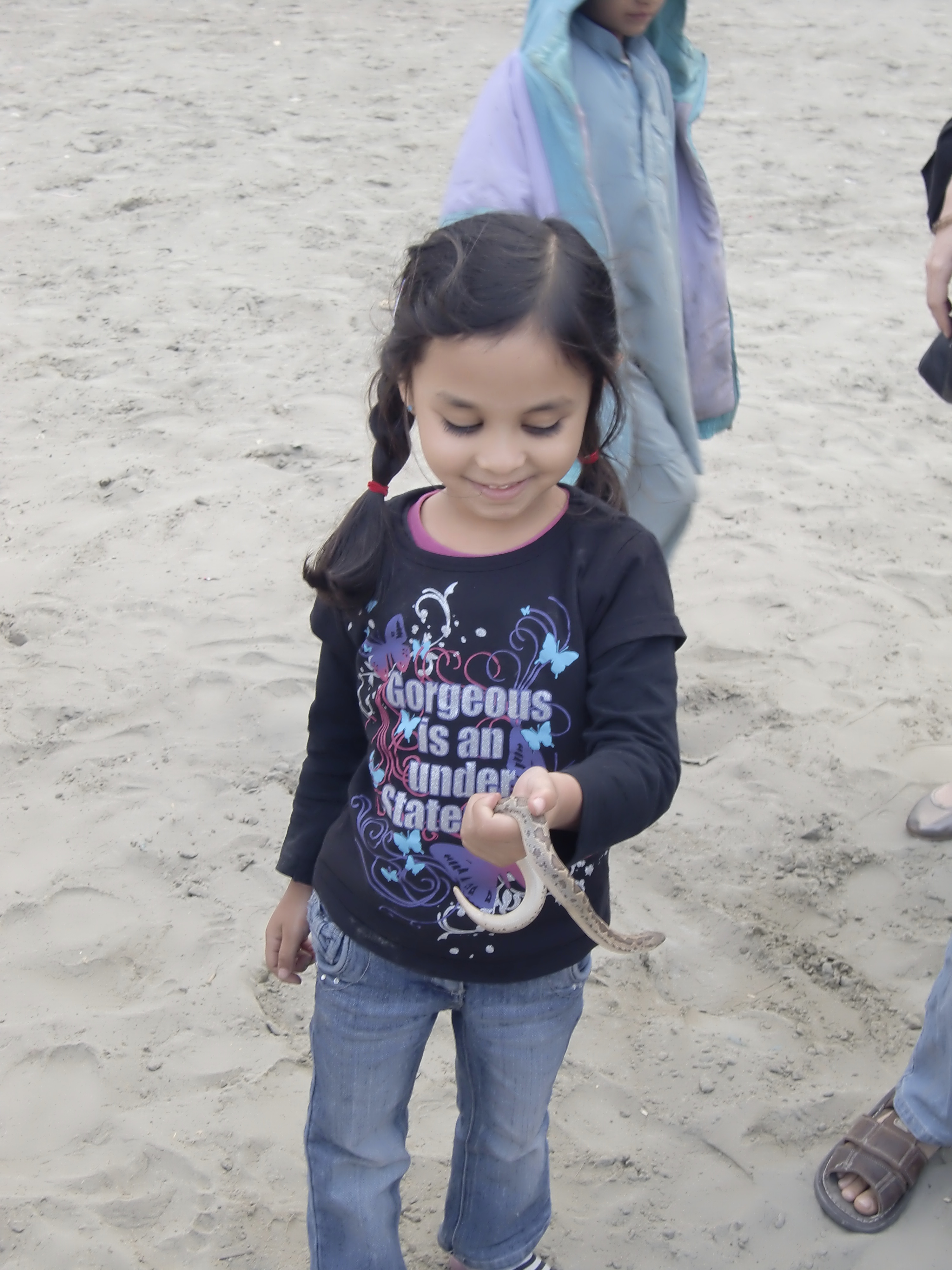
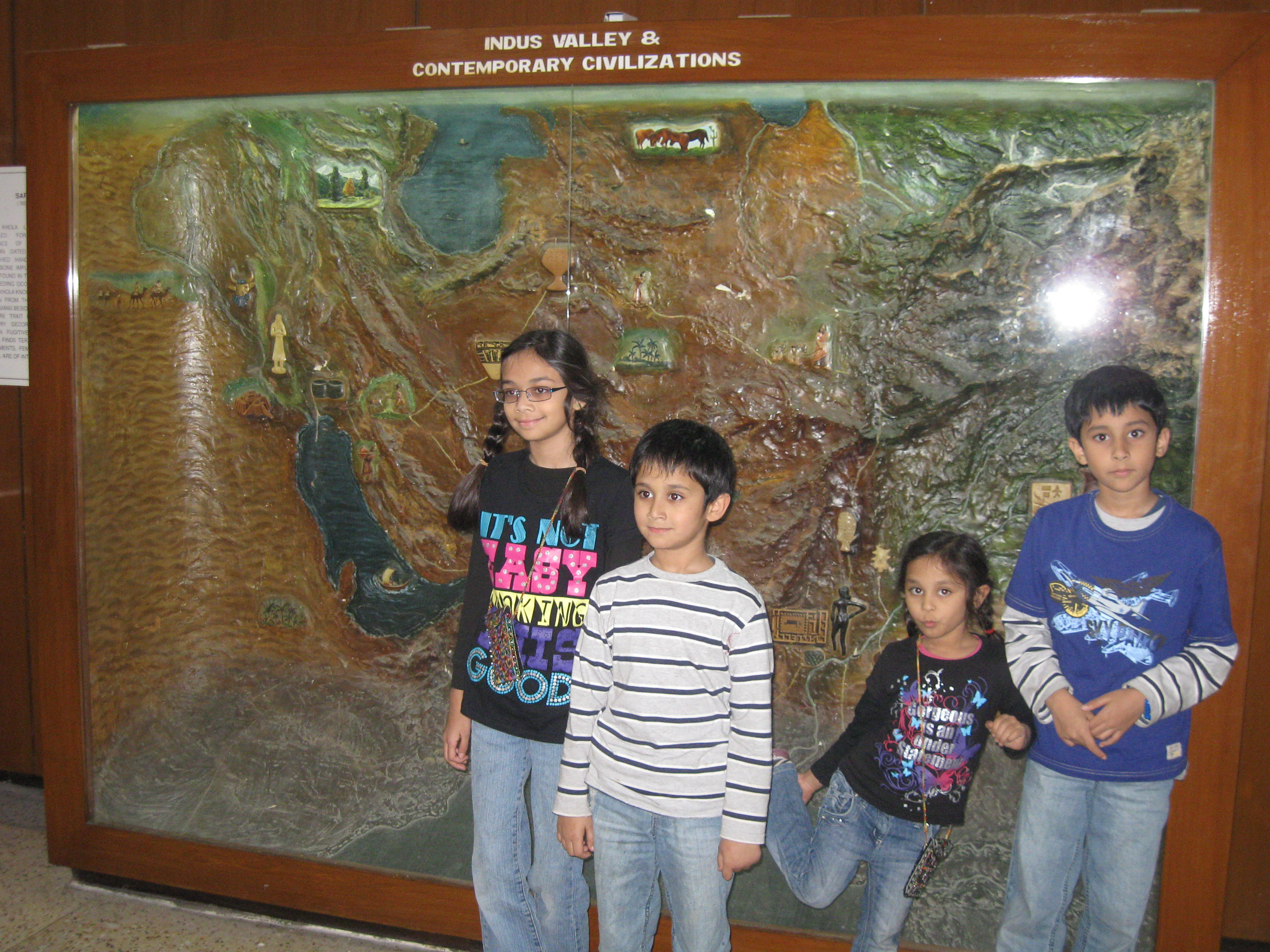
We managed to take the kids to the National Museum of Pakistan to change their impression that “Karachi is a place with hot bazaars and lots of people”, which is their standard response when quizzed about the city. So, after a spot of lunch at Alpha Restaurant and a quick peak in at Zainab Market – we couldn’t resist – it was off to the museum for a dose of culture and history and to learn about the Indus River Valley Civilisations, the Mughal Dynasty and Quaid-e-Azam. So-called ‘normality’ then returned when we headed to Clifton Beach for a heady mix of camel and horse rides and snake charmers by sunset. Only in Karachi! The four year old took a liking to a very cute “baby snake” that the snake charmer had brought out to show; but a meltdown nearly occurred when informed that she couldn’t take it home with her. Thankfully, it was averted with chocolates.

Huma’s father wanted to take the whole family on a day trip outside Karachi and Thatta was chosen as a place of historical interest. It is a city known for shrines of the various dynasties that once presided over the landmass that is now Pakistan. He was fortunate enough to get a special pass and we indeed felt privileged to have the opportunity to visit this area and learn something about important bygone epochs. The tombs at Makli remind one of the intransience of life and the permanence of death. The fine workmanship and the vibrant colours have withstood the test of time. It was a picture perfect day as the bright, clear sun, cloudless, blue sky and golden, sandy colour of the stone provided a striking landscape to photograph. Our next stop was the beautiful mosque in the town centre built by the Mughal Emperor Shah Jahan in the Fifteenth Century to thank the townspeople for their hospitality while he was staying there. What a generous gift!

The end of our stay was drawing nigh, so the pressure was on to fit in all our shopping as there were a few gifts to pick up for people at home and we were both in need of adding to our bangle collections. Our friend Farah was obliging and offered to take Danielle to all the right places. We picked up pretty much all we needed at Gulf Market before moving on to Jafferjee’s, the place known for its quality leather goods. After making a pit stop at Butler’s in Zamzama to pick up some delectable chocolates, we joined the family for high tea at The Village at Seaview.

Now, what trip to Pakistan would be complete without getting mehendi done!

Uzma and Danielle caught up one last time for coffee at Butler’s and before we knew it we were being pushed into a rickshaw with a reassuring: “Say no more, I know someone”, and off we flew to the parlour.

Hectic was an understatement! Those 12 days were certainly an unforgettable adventure! So many things to do, so little time. Unfortunately, we still left some disappointed faces in our wake. The front door felt like a revolving door at times and the phone seemed to ring non-stop; no sooner had people waved goodbye than the phone rang and some others were on their way round. We slotted in numerous visits to the homes of family and friends new and old; and well, we did leave some things undone; so we’ll just have to readmit those to the ‘to do’ list for our next visit.

The original link can be found at: 

http://www.sadaewatansydney.com/unistudentspakvisit2010.htm

The version above has some minor modifications.

CIMG4145CIMG3997CIMG4177IMG_0453Appiya and family 183CIMG4074CIMG4029CIMG4117CIMG4122CIMG4376IMG_0477DSCN3432CIMG4323

Sydney University students visit Pakistan

This lighthearted piece was published in 2008, after our first trip to Pakistan in November 2007. It certainly reflects the mood of the trip.

When our lecturer, Dr. Ahmar Mahboob (Department of Linguistics, University of Sydney), asked the six of us: Emily Hunter, Jane Harvey, Jana Rezková, Sandy Chang, Yuka Funabashi and I if we would be interested in accompanying him to Pakistan to present our various research papers at the 23rd annual SPELT (Society of Pakistan English Language Teachers) conference, we jumped at the opportunity. While most of us were busy preparing our end of semester papers, the excitement was quietly mounting beneath the manic exterior; for I think now we all sensed that a unique experience was about to happen.

On arrival at Jinnah International on November 1, 2007, we were whisked away by our surrogate family to the comforts of our new surroundings. We barely had time to catch our breath before being initiated into the frenetic Karachi traffic. First port of call was Bahadurabad to get us attired in shalwar kameez. Not ever having seen so many bright colours in the one place before, well, let’s say we were spoilt for choice. As well, it turned out to be an exercise in patience on the part of Dr. Mahboob in taking six women shopping! Next stop came our introduction to Pakistani cuisine: the roll kebab. We were hooked. After many squeals emanating from my colleagues on the trip home, due to the likes of traffic they hadn’t ever witnessed before, we finally collapsed into an exhausted heap, only to be awoken at sunrise by the call to prayer and a welcoming “as-salaam walaikum” as we wearily found our way downstairs to breakfast. Our days were a mixture of conference commitments, presentations at Karachi and Aga Khan Universities, teamed with site-seeing escapades: camel rides and snake-charming on Clifton Beach while taking in the magnificent sunset, shopping, a visit to the Mohatta Palace followed by high tea at The Village, a spot of sheisha at Seaview and more shopping intermingled with numerous visits to the homes of new-found friends. Then there was the very swish soirée hosted by the British Council. Students never had it quite so good! On the final day of the conference when all the formalities were said and done, we managed to escape to the cool of the Prince Theatre to see the acclaimed movie Khuda Kay Liye, which we all enjoyed immensely for its cultural value.

Along the way, we, the PAC (Pakistan Adventure Club), adopted many names for ourselves: the brood, the kids, the gang, the family; these pseudonyms formed part of the invisible glue binding us together through our new shared experiences.

Since the conference was a moveable feast, the next destination was Abbottabad, which we reached courtesy of PIA through Islamabad. Unfortunately, we didn’t see a lot of Abbottabad itself, but that was counterbalanced by the enthusiastic welcome and generous hospitality offered by our hosts. Leaving Abbottabad, we drove through some magnificent landscape of dramatic gorges and mountains before stopping for lunch in charming Nathia Gali, then Murree for more delicious food and naturally more shopping. Since our arrival in Islamabad coincided with Benizir Bhutto’s, as well as the fact that there was a demonstration due to be held the following day, the conference had been cancelled and the city was more or less in lockdown. However, after the security alert had been relaxed, this only gave us the green light for further site-seeing adventures, always accompanied by our generous hosts. We concluded our visit with our presentations at Fatima Jinnah Women’s University in Rawalpindi before departing by bus for Lahore.

Lahore was something else; a city steeped in history. On our ‘must see’ list was the Wazir Khan Mosque since it was one of the scenes featured in Khuda Kay Liye; and what visit to Lahore would be complete without looking in on the breathtaking Lahore Fort? Being a Sunday, there was a throng there. We, ourselves, at times became the tourist attraction; the locals just as intrigued by us as we were by them. We befriended Omayr who happened to be staying at the same guest-house as us. Lucky for us he turned out to be a Lahorite and offered to chauffeur us around. Our calender consisted of dinner at Cooco’s Den and Café, sheisha at Jumping Java, a visit to the magnificent Shalamar Gardens, and our final lunch as ‘a family’ at The Village. Sadly, Jane and Sandy had to depart for the real world. All good things must come to an end. What we had lost though in numbers we made up for in enthusiasm.

Warm faces welcomed us wherever we went and Multan was no exception. After presenting our papers for the final time at Bahauddin Zakariya University, a delicious surprise was awaiting us. We were transported by car through lush agricultural land to where we took the boat to one of the islands in the middle of River Ravi. What we then feasted our eyes on was nothing short of a scene out of A Thousand and One Arabian Nights. A sumptuous meal had been prepared by one of our hosts’ wives, which we enjoyed in our tent seated on plush carpets. What enhanced our magical experience occurred on our return trip to the mainland. Since the current was strong enough to propel the boat in the desired direction, the engine was switched off, allowing us to drift silently in the hazy darkness. Yet another memorable event was an afternoon shopping expedition stopping off for periodic cups of doodh-patti before our de rigueur foray into the world of bangles: a thrilling event in itself.

What an incredible adventure we had! All in all there were late nights and some very early mornings. Every wink of sleep lost was worth its weight in gold; we wouldn’t have missed any of it for the world; and for the heart-warming welcome we received wherever we went? Shukria, Pakistan!

The original link can be found at: http://sadaewatansydney.com//students-pk.htm